Master Your Cash Flow: The Yearly Template for Financial Clarity
For any business, cash is king. Understanding how money moves through your company—what comes in, what goes out, and when—isn't just good practice; it's essential for survival and growth. Yet, many entrepreneurs and small business owners find financial tracking daunting, buried in complex spreadsheets or confusing software. This is where a practical, visual tool becomes invaluable. The Yearly Cash Flow Statement Template is designed to cut through the noise, offering a straightforward, month-by-month map of your financial liquidity. It’s more than just a spreadsheet; it’s a foundational design asset for your financial brand identity, bringing clarity and professionalism to your internal reporting.
A Visual Blueprint for Financial Health
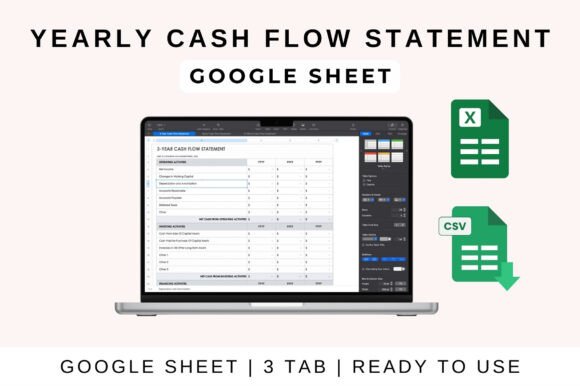
Imagine a clean, structured layout that transforms raw numbers into a coherent story. The Yearly Cash Flow Statement Template embodies modern financial typography—think clear sans serif fonts for data entry, subtle color coding for inflows versus outflows, and logical section breaks that guide the eye. Its "personality" is one of calm authority and accessibility. It doesn't overwhelm with jargon; instead, it presents the three core pillars of cash flow—operating, investing, and financing activities—in distinct, easy-to-navigate blocks. The overall appeal lies in its functional simplicity. It’s a premium font of financial organization, where every cell and formula works to create a consistent, professional visual hierarchy that makes complex data digestible at a glance.
Where This Template Delivers Real-World Value
This isn't a tool for accountants alone. Its utility spans the entire creative and entrepreneurial landscape. For the startup founder, it’s a critical companion for pitching to investors, demonstrating a clear grasp of runway and burn rate. Small business owners use it for monthly budgeting reviews and annual forecasting, ensuring they can plan for seasonal dips or investment opportunities. Freelance designers and content creators will find it perfect for tracking project-based income against software subscriptions and equipment costs, turning unpredictable cash flow into a managed process. Even for personal finance or side hustles, its structure helps separate business from personal funds, a key step in building a legitimate brand identity.
Its compatibility across Google Sheets, Excel, and Numbers means it integrates seamlessly into your existing workflow, whether you collaborate with a remote team or manage finances solo. Think of it as a versatile design asset in your toolkit—much like a reliable serif font for body copy or a bold display font for headlines—providing the stable, readable foundation upon which smarter financial decisions are built.
Practical Guidance: Implementing the Template
Getting started is straightforward, but a few best practices will maximize its effectiveness. First, treat the initial setup as a branding exercise. Customize category names to match your business’s specific vocabulary. If you’re a crafter selling on Etsy, your "Operating Activities" might include "Platform Fees" and "Supply Costs" instead of generic terms. This customization isn't just cosmetic; it enhances readability and ensures the template speaks directly to your operations, much like choosing a typeface that resonates with your audience.
When inputting data, consistency is key. Make it a monthly ritual, perhaps tied to reconciling your bank statements. The auto-calculating formulas for cash inflows, outflows, and ending balance do the heavy lifting, but their accuracy depends on your regular, disciplined entry. This habit builds a reliable dataset, turning the template from a passive document into an active forecasting tool. Use the "Notes" column liberally—contextual comments are the handwritten annotations that give your financial data depth and story.
For analysis and reporting, leverage the template’s visual clarity. The month-by-month layout instantly reveals trends. Are your cash reserves consistently positive by year-end? Which quarter shows the most significant outflow for investments? These insights are crucial for strategic planning, whether you're considering a new marketing campaign, hiring a contractor, or purchasing new equipment. Sharing the sheet with a business partner or financial advisor becomes a collaborative design review of your company's financial health, fostering informed, unified decisions.
Beyond the Basics: Strategic Financial Management
Once you’re comfortable with the monthly tracking, use the template for scenario planning. Duplicate the sheet and model "what-if" situations. What if you increase your freelance rates by 10%? How does a major equipment purchase in Q3 affect your year-end balance? This proactive use transforms the template from a historical record into a dynamic planning engine. It helps you evaluate the financial impact of creative decisions, like launching a new product line or investing in a premium design tool, ensuring your creative ambitions are grounded in financial reality.
Ultimately, the Yearly Cash Flow Statement Template is about empowerment. It demystifies cash flow management, presenting it not as a chore but as a core component of running a sustainable, professional business. By providing a clear, consistent, and automated framework, it frees up your mental space to focus on what you do best—creating, designing, building, and growing. In the landscape of business tools, it stands as a essential piece of modern typography for your finances: clear, functional, and designed for success.